

ABOUT US
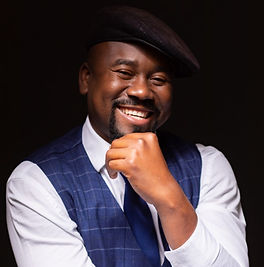
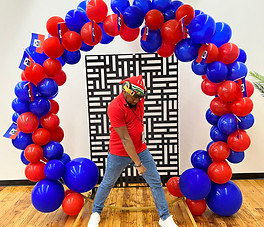





EVENS “EJ” JOSEPH
Owner • Founder • Instructor
Evens “EJ” Joseph has been dancing for almost as long as he has been moving. Born and raised in Haiti, EJ’s connection to music began before he was born—his mother remembers that whenever music played during her pregnancy, he would immediately begin moving. As a child, that instinct only grew stronger. He danced for house guests, taught his parents’ friends steps to Haitian folkloric music, and by the age of 10 was already teaching other children and organizing group performances.
By 16, EJ was teaching Latin and ballroom dance at a studio and dance club, sometimes spending five hours a day dancing and teaching. What began as a childhood love of movement was quickly becoming something much bigger: an extraordinary ability not only to dance, but to understand movement and help other people understand it too.
At 24, with the help of his stepmother, EJ moved from Haiti to Miami and eventually made his way to Boston after receiving an invitation to perform with Noche Latina. He toured with the group for three years, performing throughout Boston, New York, and the Northeast. But it was what happened off the stage that would ultimately shape his life’s work.
COMMUNITY THROUGH DANCE
As EJ built a life in the United States, he began noticing recurring conflicts in local clubs. Often, the problem wasn’t really about dancing—it was about people not knowing how to approach one another, ask someone to dance respectfully, or confidently navigate a partner-dance environment. EJ believed dance could help.
He began offering open classes at a local club, teaching Konpa and Passada along with the etiquette and communication that make social dancing work. His invitation was simple: come early, and I’ll teach you two steps. People did. As dancers became more comfortable and confident, EJ watched the atmosphere begin to change. Word spread, his classes grew, and his teaching began reaching other clubs and communities.
That experience helped crystallize something EJ had intuitively understood since childhood: dance could do much more than teach people how to move. It could change how people connected with one another.
He carried that belief to Dorchester, where he opened his first dance studio on a busy corner in a neighborhood facing significant challenges with violence and community disconnection. With the doors open, drivers stopped at the traffic light could hear the music, see people dancing, and experience a glimpse of the joy happening inside. Even local police took notice, eventually partnering with EJ and supporting his grassroots approach to community building. The studio became more than somewhere to take a dance class. It became a place for movement, conversation, connection, culture, and community.
A PIONEER OF KIZOMBA & KONPA IN BOSTON
Long before Kizomba, Konpa, and other Afro-Caribbean partner dances became widely taught throughout Greater Boston, EJ was helping introduce them to dancers across the area. Over the years, his classes helped establish and grow the local Kizomba and Konpa communities. Many dancers and instructors who later became part of those communities trained with EJ along the way—learning fundamentals, developing their movement, or receiving opportunities to begin teaching themselves.
But EJ has never been particularly interested in simply producing dancers who can memorize steps. He wants to build dancers. That philosophy eventually became the foundation of what he calls the Newborn Method.
THE NEWBORN METHOD
Developed through decades of teaching, dancing, observing movement, and figuring out how different people learn, the Newborn Method begins with one central idea: everything you learn should prepare you for what comes next.
Rather than treating Salsa, Kizomba, Konpa, Passada, Bachata, and other styles as completely separate disciplines, EJ teaches students to understand the fundamentals underneath them—weight transfer, timing, balance, connection, body mechanics, musicality, and movement. Technique matters from the beginning. When those foundations are developed intentionally, students aren’t simply learning one dance; they’re developing skills they can carry with them into the next one.
EJ’s experience dancing more than 30 styles gives him an unusual perspective on the mechanics and principles different dances share. It also contributes to one of his greatest strengths as an instructor: his ability to find another way to explain something when a student doesn’t understand it. He may relate a movement to walking, a sport, an everyday habit, or something completely unexpected—whatever helps that particular student finally feel what their body is supposed to do.
Because for EJ, teaching isn’t about proving that he can dance. It’s about proving to his students that they can too.
TODAY
After years of teaching throughout Greater Boston and operating studios in progressively larger spaces, EJ Dance Studio made its home in West Bridgewater, where EJ continues the work that began decades ago.
Today, he is a husband, father of five, instructor, choreographer, performer, DJ, mentor, and community builder. Through EJ Dance Studio, he teaches hundreds of students each year across styles including Kizomba, Salsa, Passada, Cha-Cha, Rumba, Haitian Folklore, Konpa, Merengue, Urban Kiz, and Bachata.
His work also extends well beyond the studio. EJ teaches and presents at colleges, universities, festivals, cultural organizations, and community events throughout New England, including ongoing programming at Harvard University and appearances at major dance and cultural events. Whether he’s working with someone taking their very first dance class or an experienced dancer trying to understand movement at a deeper level, the purpose remains remarkably similar to what it was when he was 10 years old teaching other children in Haiti: help someone discover what their body is capable of.
A LEGACY OF IMPACT
For EJ, dance has never existed only on the dance floor. It can build confidence. It can preserve and share culture. It can create friendships between people who otherwise may never have met. It can give someone somewhere to belong. And sometimes, it can change the direction of a person’s life entirely.
Decades after he first began teaching, EJ is still doing what has always come naturally to him: moving, teaching, connecting people, and using dance to build community.
And if you walk into EJ Dance Studio nervous, convinced you have two left feet, or certain that dancing simply isn’t something you’re capable of, EJ will probably tell you the same thing he has shown thousands of students over the years: You can dance. You just haven’t learned how yet.
MELA BRADBURY
Operations Manager • Instructor
Mela has been dancing for as long as she can remember. Growing up in Chile, she began performing as a child with her school’s folklore dance team—and, as a true ’90s kid raised on MTV, spent plenty of time learning every choreography she could get her hands on. Long before she had formal dance training, she was already creating movement; whenever a school performance needed choreography, Mela was often the student her teachers turned to.
Dance followed her throughout her life, although not always in a straight line. After stepping away for several years, she returned to movement in 2015 as a Zumba instructor. Another move, a demanding career, and life eventually pulled her away again—but it was during one of the most difficult periods of her life that dance found its way back to her.
FINDING HER WAY BACK
While going through IVF and pregnancy loss, Mela reached a point where she knew she needed to reconnect with something that made her feel like herself. She searched for a dance studio, walked into EJ Dance Studio for a Friday night class, and almost immediately felt at home. A private lesson followed the next week, and what began as a way to find herself again quickly became something much bigger. Just days after that lesson, Mela underwent another IVF transfer—this one resulting in her daughter, born in April 2024.
She continued dancing throughout her pregnancy, all the way to nine months. After becoming a mother, her perspective shifted. Life felt more precious, time more valuable, and returning to a career that kept her away from her daughter no longer felt like the life she wanted. Instead, she chose to build one around the thing that had helped bring her back to herself: dance.
That choice has also been made possible by the support of her husband, who has been a steady pillar behind the life and career she is building. His encouragement and partnership have given Mela the space to be both the mother she wants to be and the artist, instructor, and leader she continues to become—something she never takes for granted.
FROM STUDENT TO INSTRUCTOR
Under the mentorship of Evens "EJ" Joseph, Mela immersed herself in her training, at one point taking private lessons nearly every day. After her daughter was born and her maternity leave ended, she began taking a larger role at EJ Dance Studio. What started as helping behind the scenes evolved into managing the studio’s day-to-day operations, helping shape its growth, and eventually stepping into instruction herself.
Today, Mela serves as Operations Manager and instructor at EJ Dance Studio, teaching group and private lessons with a particular focus on technique and fundamentals across Bachata, Kizomba, Konpa, Salsa, and other partner-dance styles. Her teaching style is playful, creative, detailed, and persistent. She isn’t afraid to give students the feedback they may not want to hear—but she’ll also work relentlessly to figure out what they need to hear, feel, or understand to make something click. Her goal isn’t simply to teach a sequence of steps. It’s to build a stronger, more capable dancer.
Through EJ’s mentorship, Mela teaches using the studio’s Newborn Method, the same progressive approach that transformed the way she understood dance as a student. She helps students understand the fundamentals underneath movement and recognize how skills developed in one style can strengthen everything else they dance.
Having experienced the method first as an adult student and now as an instructor gives her a unique perspective. She remembers what it feels like when something doesn’t make sense, when the body won’t cooperate with what the brain is asking it to do, and the breakthrough that happens when someone finally explains it in the way you need to hear it. That experience continues to shape the teacher she is becoming.
THE FOLLOWER’S VOICE
As both a follower and a leader, Mela brings an important perspective to partner dance. She understands that a combination can technically “work” and still not feel good to the person following it. That awareness allows her to help leaders understand not only what they are leading, but how their timing, connection, movement, and choices are actually experienced by their partner.
Mela is particularly committed to being a voice for followers in a dance culture that can sometimes become lead-focused. She believes followers are not simply responding to someone else’s movement—their comfort, safety, musicality, expression, and experience matter equally. She brings that perspective into both instruction and choreography, helping create movement that feels as good as it looks.
That commitment extends especially to the women she teaches. Mela wants women to feel ownership of their bodies and their movement. For her, femininity doesn’t require choosing between strength and softness, sensuality and elegance, confidence and vulnerability. Women can be powerful and delicate, sexy and graceful, bold and tender—all at once.
She describes it as helping women discover the goddess already within them—not teaching them how they are supposed to look or move, but giving them the space and confidence to discover how they want to move.
TODAY
Alongside EJ, Mela teaches weekly group classes and private lessons and has helped bring Latin and Afro-Caribbean dance to colleges, universities, festivals, and community organizations throughout New England. Her teaching and performance experience includes programming at Harvard University, the Boston Kizomba Festival, Let’s Dance Boston, and other educational and cultural programs throughout the region.
But for Mela, the most important part isn’t where she has taught. It’s why she teaches.
WHY SHE DANCES
Mela is a firsthand witness to the power movement can have in someone’s life because dance changed the direction of her own. It gave her something joyful to hold onto during one of her lowest moments, brought her back to herself, and eventually opened the door to an entirely different vision for her life.
Today, her passion is helping create the kind of space that gave her somewhere to return to when she needed it most: a place where people can learn, connect, challenge themselves, find community, and perhaps discover a part of themselves they didn’t know they were missing.
Some days, the life she chose is busy, complicated, and overwhelming. She still chooses it. Because for Mela, dance isn’t simply what she does. It’s where she feels most like herself—and helping other people find that feeling is why she teaches.
BETTER TOGETHER
EJ and Mela are very different people—and that may be exactly why they work so well together. Their individual experiences, perspectives, and approaches to dance complement one another, creating a partnership that continues to challenge them both to grow as instructors, artists, and leaders.
Together, they bring a balance to the studio and the dance floor that is uniquely their own. They challenge each other, learn from each other, occasionally drive each other a little crazy, and continually push one another to think bigger about what EJ Dance Studio can become.
Their partnership is built on mutual respect, a shared love of dance, and a belief that what happens inside a dance studio can have an impact far beyond it. Most importantly, they share the same purpose: to build great dancers, create genuine community, and use movement to make a meaningful difference in people’s lives.
EJ built the foundation. Mela found a home in it. Together, they’re building what comes next.